Blueberry Scones

At the moment – rather depressingly – we seem to be having a lot of cold and grey around us in London as it’s been raining for days now.

Luckily, I made some blueberry scones on that one sunny weekend we had a little while ago, which allowed me to take the photos on my sun-flooded balcony and I can now bring you a hint of summer with this summery receipe and sun-lit photo!

I’ve always liked English scones with clotted cream and strawberry jam but I also like to try out new angles on old classics and therefore had to try these blueberry scones, I found a receipe in the Rose Bakery ‘Breakfast Lunch Tea’ cookbook for. Apparently, they are one of their bestsellers in their Parisian Cafe and I’m not surprised.

I had a feeling they would go down well with some lemon curd and crème fraiche – and my feeling was right. It makes them more ‘brunchy’ and maybe a little more ‘summery’ too.

Receipe from the Rose Bakery ‘Breakfast Lunch Tea’ cookbook

For 12 – 15 scones you’ll need:

  • 500g flour (plus extra for dusting)
  • 2 very heaped tbsp baking powder
  • 2 heaped tbsp sugar
  • 1 tsp salt
  • grated zest of 1 lemon
  • 110g unsalted butter, cut into pieces
  • 2 handfuls blueberries
  • 2 eggs
  • circa 300ml milk
  • 1 tbsp demerara/light brown sugar
  • creme fraiche & lemon curd to serve

Preheat the oven to gas mark 6 and grease a baking tray with butter or oil.

Mix th flour and baking powder in a bowl, then add the sugar and salt. Now add the butter and rub in with your fingers until the mixture resembles breadcrumbs. Add the lemon zest and blueberries and mix well.

Beat one egg in a measuring jug and add enough milk to reach the 300ml mark.

Make a well in the middle of the dough mix, pour in the liquid and use a fork to work it into the dry ingredients. Finish by hand but without overworking the mixture – you want a softish but still firm dough and it should not be sticky! (If it’s too dry add a little milk, if it’s too wet add some flour)

On a floured surface pat and roll out the dough to about 3cm thick, pressing the cutter straight down and pulling it straight up (to ensure the scones rise up straight). Using a 5cm cutter, cut the dough into rounds and place them on the tray (they can sit quite close together).

Beat the other egg and use to glaze the top of the scones, ensuring that the glaze only goes on the top (otherwise the scones won’t rise that well). Sprinkle with the Demerara sugar and bake for 15-20 minutes until lightly golden.

Serve warm with lemon curd and a dollop of creme fraiche.
Rhubarb Meringue Pie

I have to quickly upload this post before May is over!

When I started this blog, the idea was to blog four times a month and ever since I’ve started my new busy job this has become somewhat difficult. But I would like to at least keep posting three times a month – and this is the third one for May.

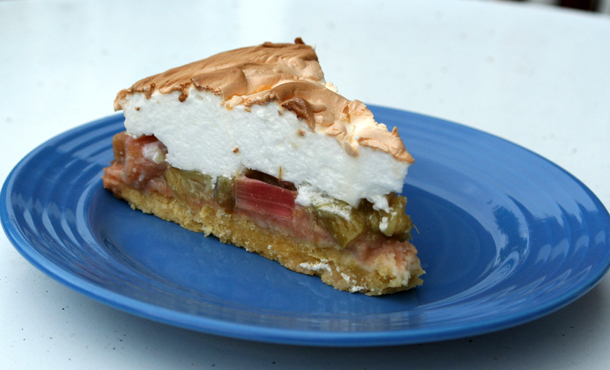
As it’s still rhubarb time but almost over I have to share one more rhubarb recipe. This one is for rhubarb meringue pie – the same one my mom has made for years!

It’s a rather typical German cake that you will find across all good Cafes and ‘Konditoreien’ this time of the year and so far my mom’s cake has proven to be very popular with other nations such as the English, French, Lithuanians, Greeks and others alike! So without further ado…

For one cake you’ll need:

  • an oiled 26cm spring cake tin
  • 300g flour
  • 200g unsalted butter or margarine
  • 80g (+2tbsps extra) caster sugar
  • 2 egg yolks
  • 800g rhubarb, washed and cut in to 2cm long pieces
  • 3 egg whites
  • 150g icing sugar

Preheat the over to gas mark 4.

For the cake base mix the flour, butter, sugar and egg yolks with the kneading paddles of your food processor or handheld whisk. It will be quite a crumbly mixture at first and then become one smooth mass. At this stage, take the dough out at this point and form a ball with your hands and press it on the base of the spring tin.

Bake the base for 25 minutes or until it gets a golden colour.

In the meantime bring 125ml water to the boil, add the rhubarb pieces and gently poach them until they become soft but not too long that they turn to mush (there will always be a few that start falling apart too quickly but that’s ok). Once they are soft tip them in to a sieve to drain.

Now add the rhubarb to the pre-baked cake base and sprinkle the 2 tablespoons of sugar on top.

Whisk the egg whites – adding the icing sugar in 3 separate parts as you whisk – until it forms stiff peaks (if you add all the sugar at the same time, this cannot happen so don’t rush it).

Spread the meringue on top of the rhubarb and bake again for another 20-30 minutes at gas mark 3 until the top becomes golden brown. Take out of the oven and after 10 minutes, take the cake out of the tin and leave to cool completely, which will take a few hours.

Blueberry and Cottage Cheese Pancakes

I fear that all these sweet brunches start showing on my hips soon and with summer just around the corner this is not good news! The good news though is that this concern made me look for recipes with less calories, less fat and less sugar and I shall share some with you.

As my favourite brunch dish is probably still a pancake I started experimenting with some healthier pancake receipes I found. Winning this experiment were these blueberry cottage cheese pancakes!

It may sound a bit strange to have cottage cheese in your pancake batter but as I had already successfully made pancakes with Quark in the past (see Quark Pancakes with Spiced Apples), another almost fat free cheese, cottage cheese seemed like another good option for making ‘skinnier’ pancakes.

Cottage Cheese has hardly any fat, yet is full of protein and it gives the pancakes subsistence, texture and height. Admittedly, on it’s own, the pancakes are a bit too ‘healthy’ tasting due to the cottage cheese.

That’s why I decided to add some blueberries – they add a fruity sweetness to the slightly tart/tangy pancakes. Adding them to the batter, rather than just served aside the cooked pancakes, allows the blueberries to warm through as the pancakes are being cooked, until the juices start bursting out.

Do keep a few berries aside for serving though – along with a drizzle of Maple Syrup or maybe Agave Nectar, which apparently is the healthier sweetener!

For 2 portions you’ll need:

  • 3 eggs

  • ¾ cup low fat cottage cheese

  • ¼ cup flour
  • ca 150g blueberries (a small punnet)
  • a little low cal spray oil for cooking, if you want to keep the fat low (otherwise you can use vegetable oil or any other fat, such as butter)

Separate the eggs and whisk the egg whites stiff.

In another bowl whisk the egg yolks until they become thick and paler, and then stir in the cottage cheese, followed by the flour. Then fold the egg whites under and add as many of your blueberries as you like (I added two thirds of a small punnet and kept the rest aside).

Heat a pan and spray a little low cal spray oil, then use a big serving spoon to make some circles from the batter and cook the pancakes until the border of them starts to show bubbles. Flip carefully over and continue cooking for about 3-5 minutes, careful not to burn the pancakes.

Serve with more blueberries and syrup of your choice!

Peanut Butter Brownie Bites

This is all a bit of a cheat…

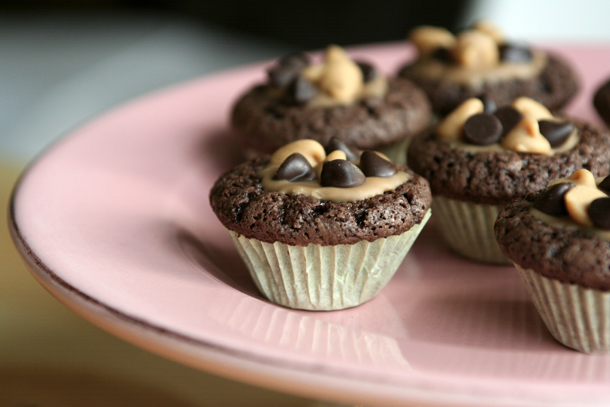
To start with, these mini cakes are not even really brownie bites but rather little brownie based mini cupcakes. Furthermore, even I wouldn’t really eat these kind of sweet treats for breakfast or brunch – they are just too small! No, of course not. In fact, they are this small for a reason – if they were any bigger, their sweet, rich and gooey taste would just be too much.

So, to be honest, I made them as little afternoon treats for my office but they turned out so well that I wanted to share the recipe on my brunch blog with you.

The recipe is also a bit of a cheat’s recipe, as it requires you to use a packet brownie mix. I know it’s not the proper way, using a packet mix, but it was quicker and cheaper to grab a ready mixed brownie box from the supermarket shelf rather than picking up the separate ingredients.

If you really can’t bring yourself to get a little help from Betty Crocker, I’d suggest using the brownie recipe from Mary Berry, which is my trusty go-to for brownies and which I will feature here in due time (in the meantime you may have to do a Google search).

For the topping I used a smooth peanut butter with a hint of chocolate, suitably called ‘YUM YUM’, which I brought over from South Africa. I’m sure any smooth peanut butter will work but it may be best to stick with plain ones as any more than a hint of chocolate will be too sweet – you want the salty peanut taste to balance the sweet brownie mix.

If you like peanut butter, you have to try these…

This recipe is adapted from Baked Perfection http://www.bakedperfection.com/2009/07/peanut-butter-cup-brownies.html

For 24 mini brownie bites/ cupcakes you need:

  • 1 box of store bought brownie mix, such as Betty Crocker’s and the ingredients required on the box (usually an egg, some oil and some water)
  • 1/3 cup peanut butter chips
  • 1/3 cup dark chocolate chips
  • 1/3 cup creamy peanut butter

Preheat the oven to gas mark 4 and line a mini muffin tray with mini muffin cases (I tried just oiling a supposedly non-stick tray and would highly recommend using muffin liners instead for these are sticky little things!).

Prepare the boxed brownie mix as directed and spoon the batter evenly into the muffin cups, each will take about 1½ teaspoons.

Bake the cakes for 13-15 minutes or until they have risen and the top is set but the inside is still ever so slightly moist.

Get the tray out of the oven and wait 3-5 minutes before pushing a little dent into the centre of the muffin tops – either with back of a teaspoon – or if you’re not too heat sensitive, with your fingers. You want a little, shallow dent for the peanut butter to go in to.

Place the peanut butter in a small microwave-safe dish and warm it up in the microwave for circa 30 seconds, so it becomes more spreadable. Then, while the cakes are still warm, add about half a teaspoon of peanut butter on each cake and sprinkle on a mix of the peanut butter and the dark chocolate chips. They will start to melt but only ever so slightly,  just enough to keep everything together when they are fully cooled down.

Leave to cool completely and enjoy!

Rhubarb Marzipan Muffins

Have you noticed that it’s rhubarb time?

My sister did and requested that I upload a receipe featuring the tangy vegetable that gets used rather like a fruit in most dishes (think crumble, compote, pie…).

The obvious choice for me would have been to use rhubarb in a cake with a meringue pie topping, which is probably the most common way of using rhubarb in a cake, in Germany. But I went through my cookbooks in search for something different…

The sister who asked for a rhubarb suggestion is also a big marzipan fan so I thought it could be good to combine the two in a sweet and sour way. And as I browsed through my Ottolenghi cookbook, I found my inspiration – a recipe for marzipan and plum muffins, which after a few changes became this recipe for my marzipan rhubarb muffins.

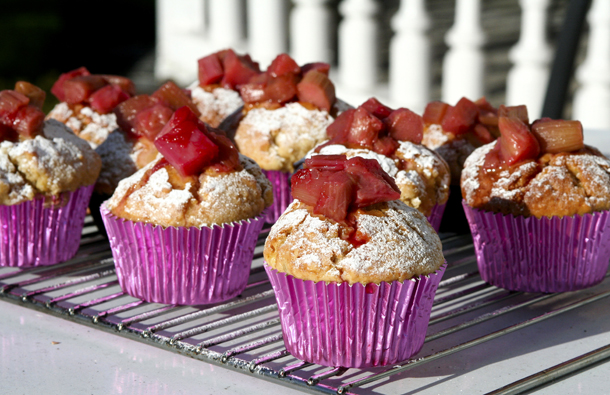
I particularly like the look of the muffins with the fruit compote on top, as if a little muffin volcano is erupting with juicy fruits. I’d recommend getting the pink rhubarb stalks, rather than the ones that are mainly green, as the pink colour will  look much nicer on top of the muffins. I also choose thin stalks, as again they will look better, more delicate, on the muffins.

The muffins were much liked but a little dry at first, so to perfect the receipe I decided to add more rhubarb to the dough and it did the trick.

 Start with the rhubarb compote, for which you will need:

  • 800g rhubarb
  • 300ml water
  • 160g sugar

Trim the rhubarb and cut it into 1,5 cm lengths.

Mix the water and sugar and heat, stirring from time to time, until the sugar has melted. Then add the rhubarb to the sugar syrup and poach gently until just soft – the rhubarb must not collapse but keep its shape.

There will probably be a lot of juice left at this stage, if so remove the fruit but keep the juices on the boil to reduce them down to a thicker syrup.


While the rhubarb cools down get on with the muffins.

For 12 muffins you will need:

  • 480g flour
  • 1tsp baking powder
  • ½ tsp bicarb of soda
  • 1 pinch of salt
  • 200g sugar
  • 2 eggs
  • 110g margarine or butter, melted but slightly cooled down
  • 280ml milk
  • grated zest of 1 lemon
  • 120g marzipan
  • a muffin tin and paper cases

Preheat the oven to 170 degrees/Gas Mark 3 and line your muffin tin with paper cases.

Mix the flour, baking powder, bicarb of soda and salt in one bowl. In another, larger bowl whisk the sugar and eggs, then add the milk and butter and whisk again to combine.

Grate the marzipan on the coarse side of a grater and add it to the batter, together with the lemon zest.

Now add 2/3 of the rhubarb compote and stir together. The rest of the compote is for the topping of the muffins, so set it aside for later.

Gently fold the flour mix into the wet mix until just combined – there may still be a few lumps of flour, which is actually wanted (if muffin batter gets over mixed the muffins become hard and dense).

Spoon the mixture in the prepared muffin tin, filling each case all the way to the top to ensure you will get that muffin top platform.

Bake for 25-30 minutes, until a toothpick inserted in the middle of the muffin comes out clean.

Let the muffins cool down a few minutes until you can handle them at which point they need to be taken out of the tins, to fully cool down on a wire rack.

When the muffins are cold, dust the tops with icing sugar and top with the reserved compote.
Enjoy!